Regardless of what you may have heard, those citrus-flavored Vitamin C tablets can only do so much for your immune system.
Regular movement can help support your immune system1, reduce your risk of dementia2, lower stress, and maintain strength and mobility as you age. Even moderate physical activity can support overall wellness and healthy aging. Whether it’s walking, strength training, or stretching, staying active can help you feel stronger and more energized day to day.
Remember that exercise is effective in moderation. Start slowly then slowly increase the intensity as you get stronger and look for more challenging exercise activities.
Here are three types of exercise that can help you feel better and fight off disease:
Strength training
Strength training is about more than building muscle. As we age, maintaining muscle strength can help support balance, mobility, joint health, and independence.3
The Centers for Disease Control (CDC) recommends muscle-strengthening activities two or more days per week.4 This can include lifting weights, working with resistance bands, push-ups, sit ups, yoga, and seated rows. Talk to your doctor about strength training activities that are safe for you to do.
Aerobic exercises
Aerobic exercise, often called “cardio,” is great for people of all ages, but especially important as we age. It can reduce the risk of disease, help people live independently longer, and improve your immune system, according to the CDC.5
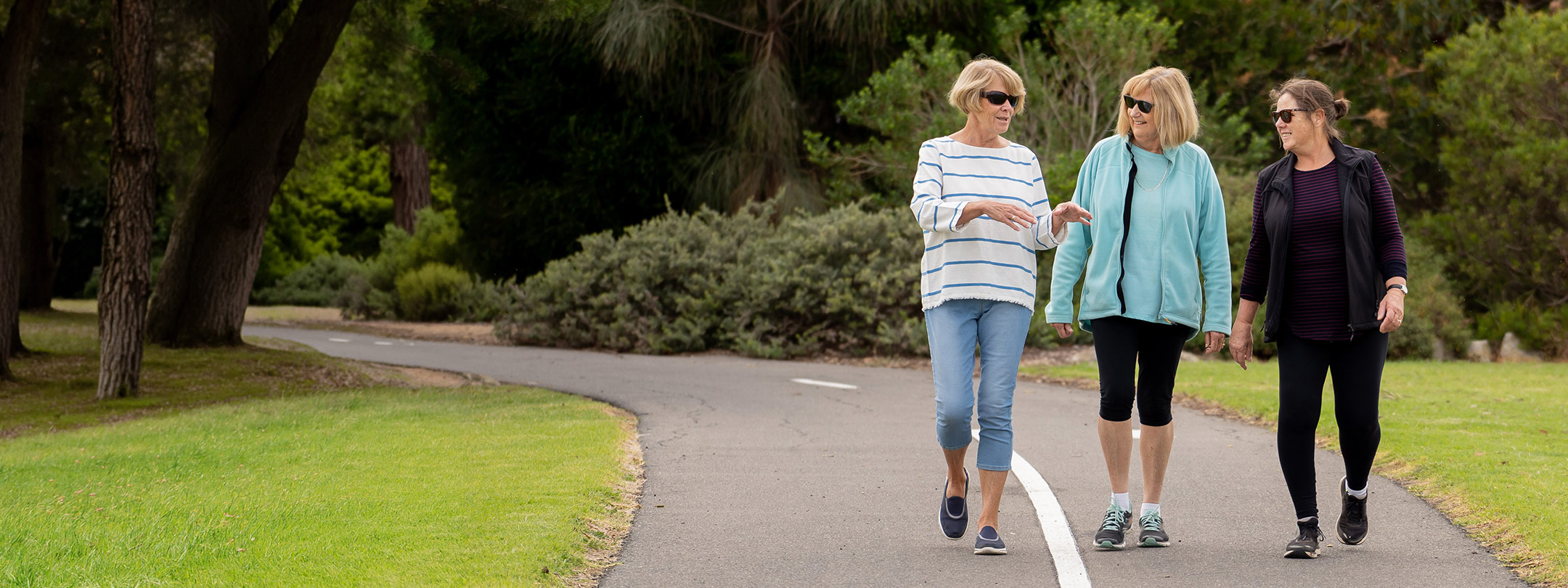
Activities that get your heart beating faster and make you breathe a little harder count as aerobic exercise. Go for a brisk walk, take a bike ride, attend a water aerobics class, or even do some yard work.
The CDC recommends about 150 minutes of moderate-intensity aerobic activity each week, but even smaller amounts can still provide meaningful health benefits and can be built up over time.4
Balance and flexibility exercises
With age, we lose muscle and bone mass, which can make it hard to stay balanced and avoid falls. By incorporating balance and flexibility exercises into your routine, you can help improve your stability and reduce the risk of falls.4
Balance activities don’t have to be scary or complicated. Try walking heel-to-toe, practicing standing from a sitting position, and using a wobble board.2
Be sure you have either someone to support you or something to grab on to, like a chair. Talk with your doctor about your fall risk and what kinds of balance exercises you should do to strengthen your bones and muscles.
Live your healthiest life
Exercise is a powerful way to improve your overall health and immune function. By incorporating each of these three types of exercise into your routine, you can gain more confidence in yourself and your health.
If you’re looking for a health plan that supports your health and well-being, visit the Select Health plans page.
Sources
2 Physical Activity Guidelines for Americans, 2nd edition, U.S. Department of Health and Human Services, 2018
3 The benefits of strength training for older adults, American Journal of Preventive Medicine, 2003
4 Older Adult Activity: An Overview, Centers for Disease Control, 2025
5 Physical Activity Benefits for Adults 65 or Older, Centers for Disease Control, 2025
This article is intended for informational purposes only and is not legal or medical advice. Links to other sites are provided as a convenience, but Select Health does not endorse the third-party sites, information, or services.
The content included here is for your information and not a substitute for professional medical advice. It should not be used to diagnose or treat a health problem or disease. Please consult your doctor if you have any questions or concerns. Additionally, this information does not guarantee benefits. To review your benefits, please reference your plan materials or call Member Services at 800-538-5038 weekdays, from 7:00 a.m. to 8:00 p.m., and Saturday, from 9:00 a.m. to 2:00 p.m., closed Sunday. TTY users call 711.
Related Articles