
Blood pressure (BP) is the force of blood against the inside walls of your arteries. When your arteries become narrow, the pressure of the blood goes up. This causes high blood pressure (also called hypertension).
High blood pressure can damage your arteries, reduce blood flow to important organs, and make your heart work harder. According to the Centers for Disease Control, uncontrolled high blood pressure can increase the risk of heart disease, stroke, kidney disease, vision problems, and other serious health conditions.1
How is it diagnosed?
To measure your blood pressure, your doctor will wrap a special cuff around your arm. The cuff is attached to a machine or gauge. When the cuff is inflated, it measures the pressure in your blood vessels in millimeters of mercury (mmHg).
Blood pressure is measured with two numbers, for example, “120 over 80” (written as 120/80). The first number is your systolic pressure (when your heart beats). The second number is your diastolic pressure (when your heart rests between beats). The table below shows the numbers for normal, elevated, and stages 1 and 2 for high blood pressure.
Your doctor will check your blood pressure several times to determine if you have high blood pressure on a regular basis.
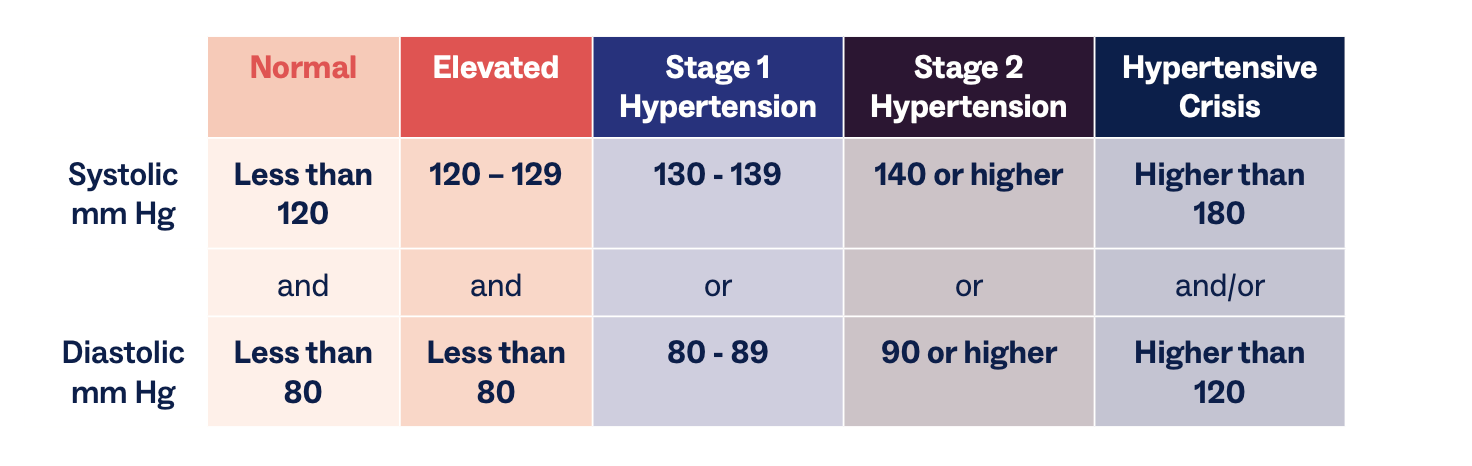
Blood pressure categories are based on current guidelines from the American Heart Association.2
What causes it?
High blood pressure often develops gradually over many years and becomes more common with age, according to the National Institute on Aging.3 Certain things can increase your risk for high blood pressure. These are called risk factors.
These are risk factors you can change:
- Physical inactivity
- Being overweight or obese
- Diet high in sodium or processed foods
- Smoking and tobacco use
- Chronic stress1
These are risk factors you cannot change:
- Family history
- Age: Risk increases as you age3
- Race: Risk increases for Black, Hispanic, and Asian adults4
What are the symptoms?
High blood pressure usually does not cause symptoms, which is why it is often called a silent condition. In rare cases, severe high blood pressure may cause headaches, dizziness, or nosebleeds.1
However, most people don’t have any signs or symptoms. For this reason, you should have your blood pressure checked regularly, even if you’re feeling fine.

Manage your blood pressure with MAWDS
“MAWDS” is an acronym that can help you manage your risk factors and your blood pressure. It means:
- Medication: Take your medication as prescribed by your doctor, even if you feel fine. Even if you've reached a blood pressure goal, you may not be able to maintain that level without medication.
- Activity: Staying active every day is one of the best ways to control your blood pressure. Regular physical activity can help lower blood pressure and support overall heart health.1
- Weight: Maintaining a healthy weight can lower your risk of high blood pressure.
- Diet: Eating a healthy diet can lower your blood pressure. This includes eating fewer high-sodium foods and including more fruits and vegetables into your daily meals.
- Smoking and stress: Tobacco harms your arteries and increases blood pressure. Stress over many months and years can also hurt your body. Quitting smoking and learning to reduce stress can lower your blood pressure and improve your overall health.
Because blood pressure tends to increase with age, regular screenings are especially important for older adults—even when you feel healthy.3
For information on our medical and dental plans, visit selecthealth.org/plans.
This article is intended for informational purposes only and is not legal or medical advice. Links to other sites are provided as a convenience, but Select Health does not endorse the third-party sites, information, or services.
The content included here is for your information and not a substitute for professional medical advice. It should not be used to diagnose or treat a health problem or disease. Please consult your doctor if you have any questions or concerns. Additionally, this information does not guarantee benefits. To review your benefits, please reference your plan materials or call Member Services at 800-538-5038 weekdays, from 7:00 a.m. to 8:00 p.m., and Saturday, from 9:00 a.m. to 2:00 p.m., closed Sunday. TTY users call 711.
Sources
1. About High Blood Pressure, Centers for Disease Control, 2026
2. Understanding Blood Pressure Readings, American Heart Association, 2025
3. High Blood Pressure and Older Adults, National Institute on Aging, 2022
4. Know Your Risk Factors for High Blood Pressure, American Heart Association, 2024
Related Articles