Key takeaways
- Water and plain milk are the best drinks for kids, according to the American Academy of Pediatrics.
- Sports drinks, soda, and fruit juice can contain lots of added sugar and should be limited.
- You can make healthy drinks more fun by adding natural food coloring or fruit.
Soda, sports drinks, and fruit juice can contain large amounts of added sugar. Experts recommend water and plain milk as the best beverages for children. Learn which drinks support healthy growth and hydration, which beverages to limit, and simple ways to make healthier drink choices more appealing for kids.
It’s not a secret that many popular kid drinks contain added sugars. They often have bright colors, fun names, and clever marketing. Not to mention…they’re usually pretty tasty.
While a treat now and then is fine, sipping on sugary drinks every day isn’t the healthiest choice. According to the Centers for Disease Control (CDC), 24% of added sugar in the average American’s diet comes from sugary drinks.1
If you’re trying to reduce your family’s added sugar intake, it’s important to learn more about the options out there. Here are some healthy drink options for your family, and some drinks you may want to avoid.
Best drinks for kids
Pediatricians recommend only a few drinks for kids.
Water
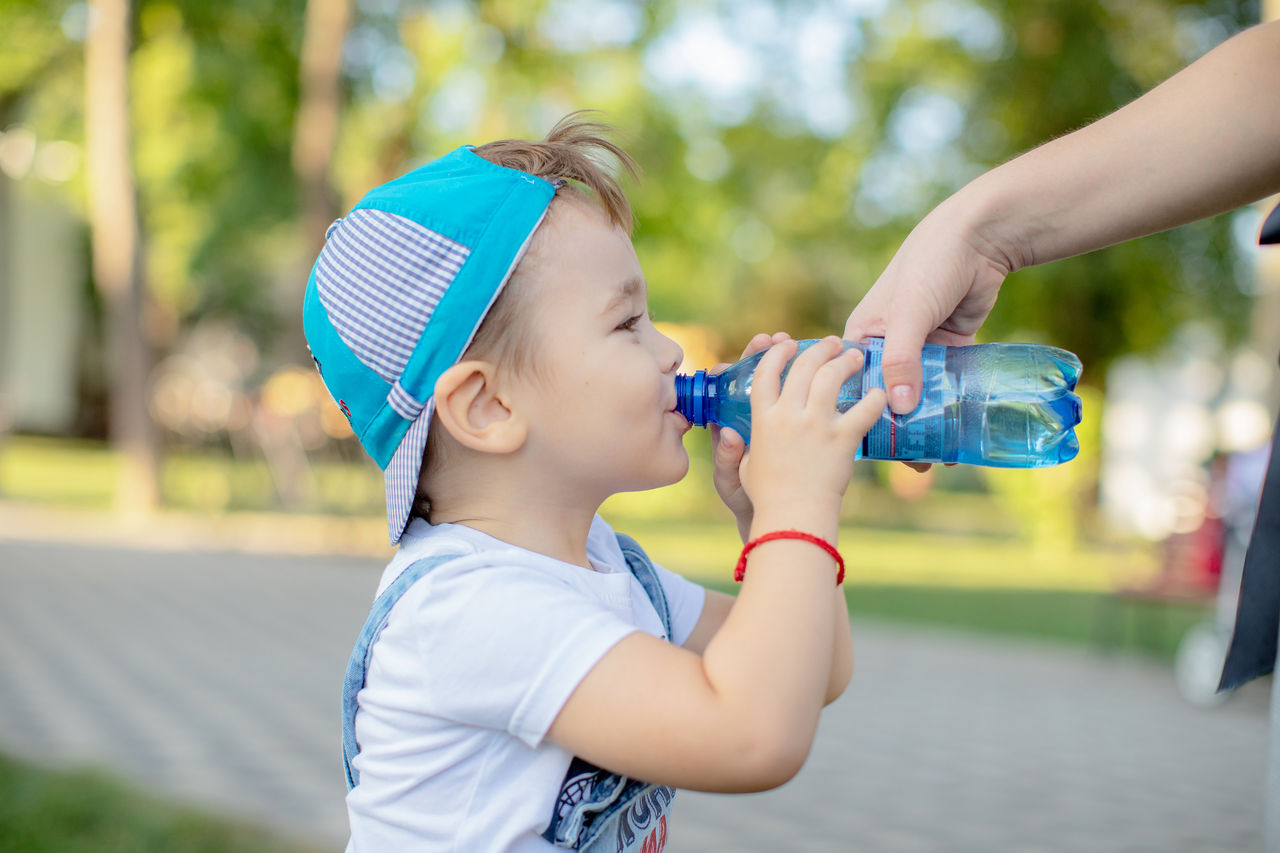
Water is something people of all ages should prioritize every day. The American Academy of Pediatrics (AAP) says it (along with plain milk) is the best drink for kids.2 Water has no calories, no sugar, and it helps the body function well.
Water helps blood circulate, maintain a healthy weight, and support joints, teeth, and bones. Additionally being well-hydrated can improve mood, memory, and attention in children.2
If your child isn’t sold on plain water, get some fun, reusable cups or straws to make it a little more exciting. You can also try fruit-infused water, often a great transition for kids who are used to sweeter drinks. Fruit-infused water adds flavor without added sugar.
Milk
For little ones five and under, the AAP recommends milk in addition to water.3 Plain cow’s milk starting at 12 months old is a great way for children to get calcium, vitamin D, protein, vitamin A, and zinc. If your child doesn’t drink dairy milk, talk with your pediatrician about fortified alternatives, like soy or oat milk.
It’s important to note that flavored milks, like strawberry or chocolate, usually contain lots of added sugar. If your kids aren’t thrilled about plain milk, consider adding a tiny bit of natural food coloring to add some pizazz.
Homemade smoothies
For a tasty treat without added sugars, you can whip up a homemade fruit and veggie smoothie. Since you’re the one making it, you can mindfully choose what ingredients to add. It’s important to avoid juices or sweetened yogurt. Consider using whole fruits and vegetables, milk or water, and plain Greek yogurt.
Though it’s easy to add lots of produce into the blender, it’s recommended that you only add the amount of food your child would eat whole (not in a smoothie). For example, if your child would normally only eat one banana with a little bit of peanut butter and half a cup of spinach for a snack, don’t add any more than that to the smoothie.
Here’s an example from the AAP of a smoothie recipe for a child:4
- 8 oz milk
- 1 banana
- 1 tsp. Peanut butter
- Ice
If you're not sure how much fruit or food you should be feeding your child, have a conversation with your child’s medical provider. Together, you can make sure your child is getting the nutrients they need.
Kids drinks to limit or drink in moderation
On the flip side, there are many drinks that have lots of extra sugar that kids don’t need. Here are a few drinks you’ll want to avoid.
Fruit juice
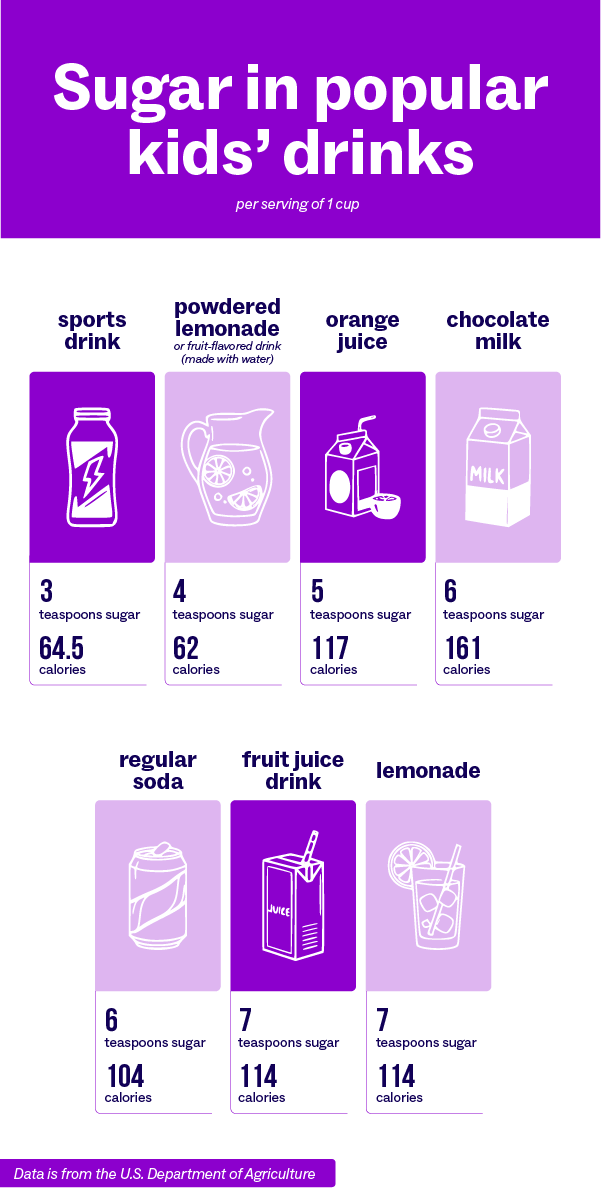
Fruit juice may seem like a healthy choice—after all, it comes from fruit! But it takes a lot of fruit to fill a cup of juice. And even though it’s natural sugar, it can still raise insulin levels.
The AAP doesn’t entirely discourage fruit juice for kids older than 12 months, but they do encourage moderation.5 For children ages 1-6, limit fruit juice to 4-6 oz. per day.5
Sports drinks
While sports drinks can provide hydration for kids, they’re also chock-full of sugar. The AAP recommends against them, since the added sugar can increase the risk of excess weight gain, cavities, heart disease, diabetes, and fatty liver disease.3
There are low-sugar and sugar-free versions of sports drinks available, but the AAP advises against giving children artificially sweetened drinks. There isn’t a lot of research behind the effects of artificial sweeteners and children, so it’s best to avoid them.2
Soda
Just like fruit juice and sports drinks, soda can be a major source of added sugar. According to the U.S. Department of Agriculture, the average can of soda has 37 grams of sugar.
It’s a good idea to limit how much soda your child has. Not only are they sugary, but they add empty calories to their diet and discourage the habit of drinking plain water.2
Healthy choices for healthy kids
Even though it can be a struggle, help your child choose the drinks that will help them feel and function their best. Stick to water and milk and avoid excess sugar. And if you’re not sure what the best choice is for your child, call your medical provider. They can help you make the right decisions for your child’s health.
If you need to find a new insurance plan that supports a healthy family, check out our individual and family plans. We have options for those living in Colorado, Idaho, Nevada, and Utah. Visit our website to learn more.
This article is intended for informational purposes only and is not legal or medical advice. Links to other sites are provided as a convenience, but Select Health does not endorse the third-party sites, information, or services.
The content included here is for your information and not a substitute for professional medical advice. It should not be used to diagnose or treat a health problem or disease. Please consult your doctor if you have any questions or concerns. Additionally, this information does not guarantee benefits. To review your benefits, please reference your plan materials or call Member Services at 800-538-5038 weekdays, from 7:00 a.m. to 8:00 p.m., and Saturday, from 9:00 a.m. to 2:00 p.m., closed Sunday. TTY users call 711.
Sources
1. Be Smart About Sugar, Centers for Disease Control, 2026
2. Choose Water for Healthy Hydration, American Academy of Pediatrics, 2024
3. Recommended Drinks for Children Age 5 & Younger, American Academy of Pediatrics, 2023
4. Are blended smoothies good for my child?, American Academy of Pediatrics, 2017
Infographic sources
Soft drink, NFS, U.S. Department of Agriculture, 2024
Fruit flavored drink, powdered, reconstituted, U.S. Department of Agriculture, 2024
Lemonade, fruit juice drink, U.S. Department of Agriculture, 2024
Chocolate milk, NFS, U.S. Department of Agriculture, 2024
Sports drink, NFS, U.S. Department of Agriculture, 2024
Fruit juice drink, with high vitamin C, U.S. Department of Agriculture, 2024
Orange juice, 100%, NFS, U.S. Department of Agriculture, 2024
Related Articles