
Key takeaways
- Childhood vaccines help protect against serious diseases and have made many illnesses rare in the United States.
- As children grow, they become eligible for different recommended vaccines at different ages.
- Staying on schedule helps ensure children are protected when they are most vulnerable to certain diseases.
- Children can receive recommended vaccines through their pediatrician, primary care provider, local health department, or some pharmacies, making it easier for families to stay up to date.
Childhood vaccines are a safe and effective way to protect children from serious illnesses throughout every stage of development. From infancy through adolescence, the recommended vaccine schedule helps ensure children receive protection when they need it most. By staying current on vaccines and attending regular well-child visits, parents can help keep their children healthy.
Childhood vaccines are one of the simplest and most effective ways to protect children from serious diseases. The American Academy of Pediatrics (AAP) says, “...childhood vaccination programs have prevented 103.1 million cases of diphtheria, hepatitis A, measles, mumps, pertussis, polio and rubella since 1924.”1 Diseases that were once common and severe are practically unheard of today because of vaccines.
Keeping up with your child’s health milestones can feel overwhelming—especially if you have more than one child. Between checkups, school forms, and everyday life, it’s not always easy to know which vaccines your child needs and when.
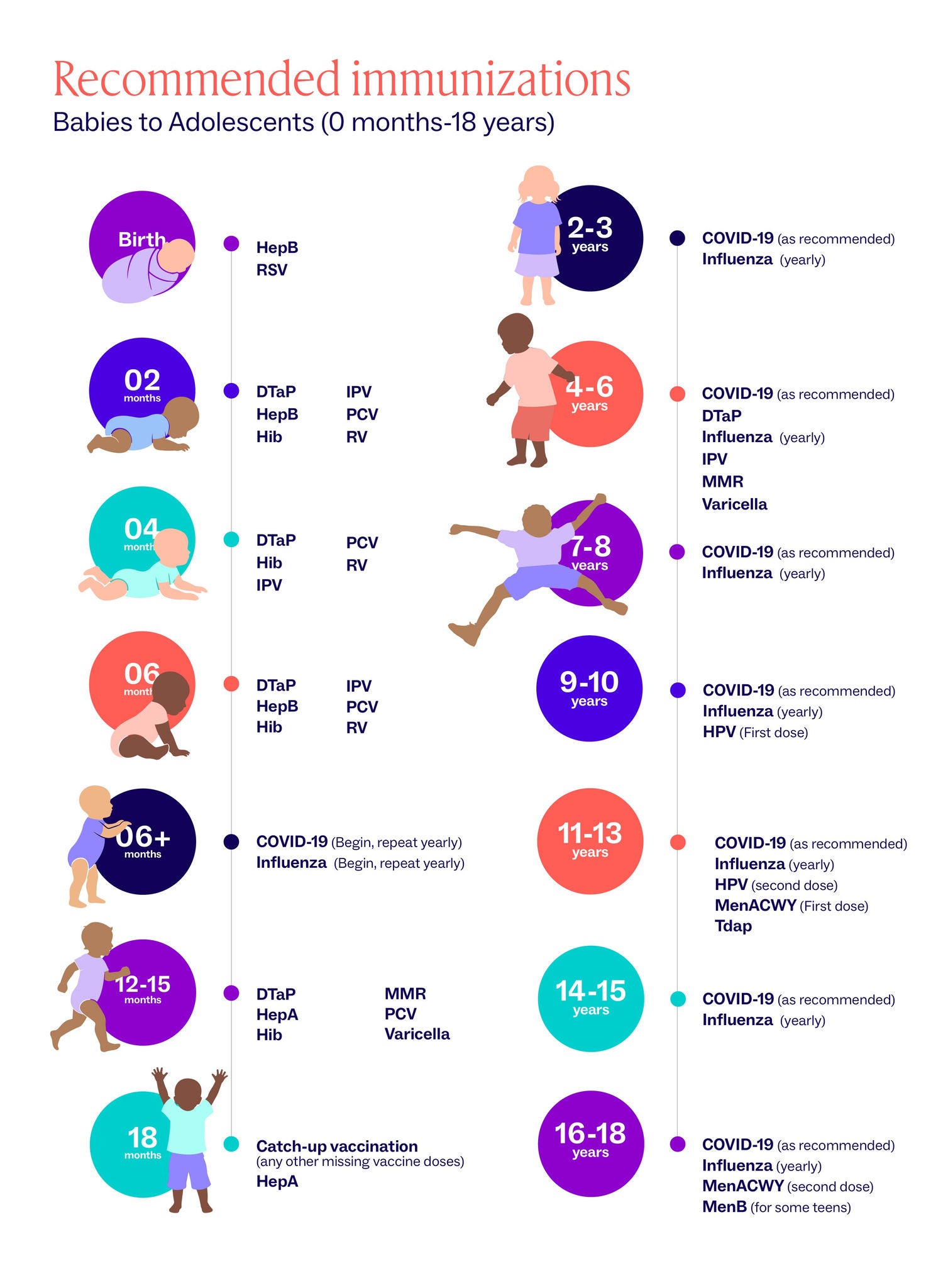
Here’s a quick guide to help you understand what vaccines your child needs at what age.
What is the childhood vaccine schedule?
The childhood vaccine schedule is a timeline of vaccines children need and at what age. It’s developed by medical professionals to prevent children from getting serious illness or disease.
What vaccines do infants and toddlers need?
Infants, from birth to 12 months, need several vaccines to stay healthy and prevent disease. The AAP recommends the following:2
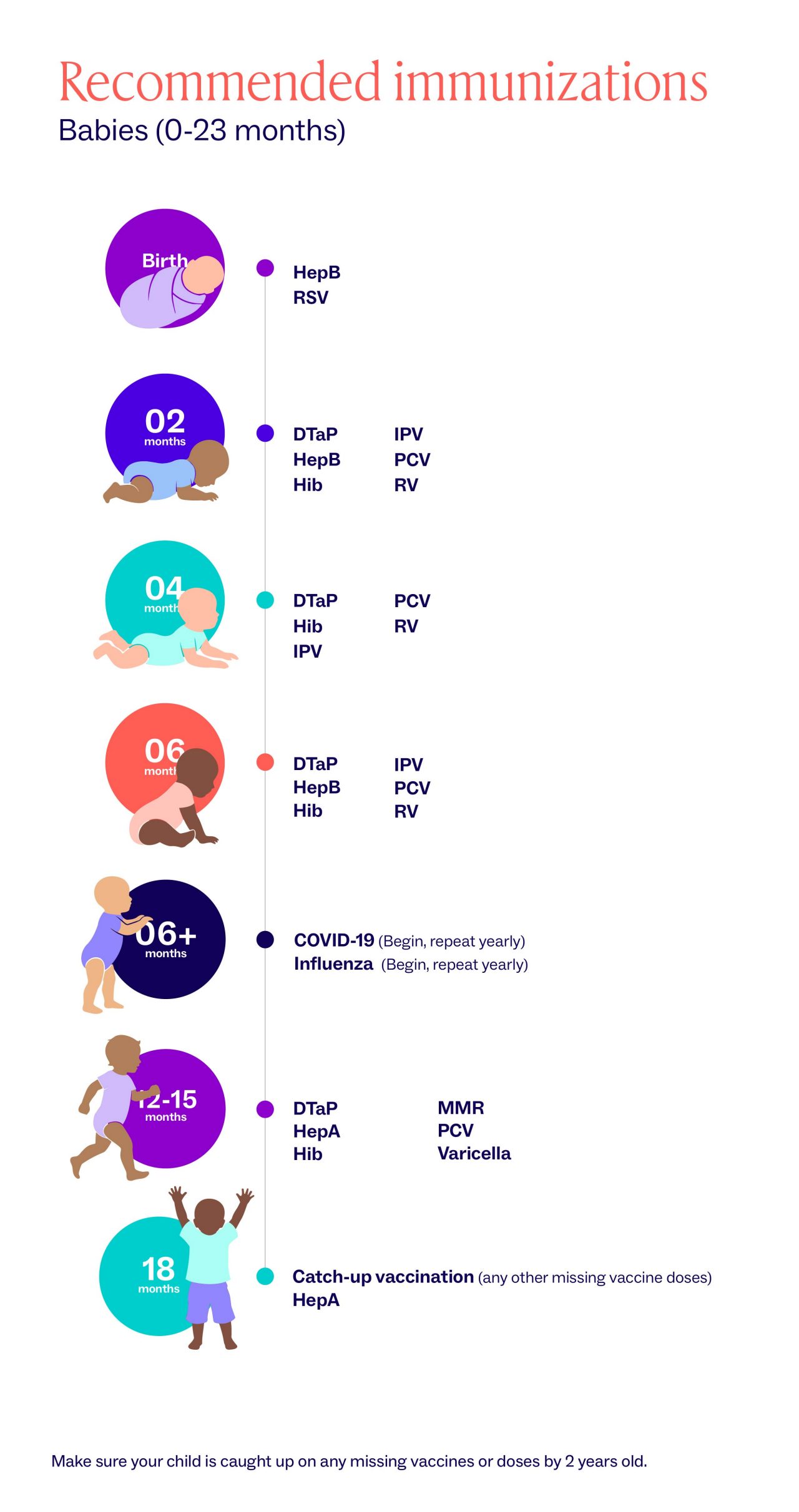
Note: Many of these vaccines are combined into one shot. For example, the “Pediatrix” shot combines hep B, DTaP, and polio into one injection.
Newborns
When they’re born, newborns should receive a hepatitis B and possibly an RSV vaccine.
Babies/toddlers
From ages 1-11 months, babies need:
- Hepatitis B (doses 2 and 3)
- Rotavirus (2-3 doses, depending on brand used)
- DTaP (3 doses)
- Hib (3 doses)
- Pneumococcal (3 doses)
- Polio (3 doses)
- Flu (annually starting at 6 months)
- COVID-19 (annually starting at 6 months)
From 12-23 months, babies/children need:
- DTaP (4th dose)
- Hib (4th dose)
- Pneumococcal (4th dose)
- MMR (1st dose)
- Chickenpox (1st dose)
- Hepatitis A (2 doses)
- Flu (annually)
- COVID-19 (annually)
Because children ages 2 years and younger are at a higher risk of severe COVID and hospitalization, the AAP recommends the COVID-19 vaccine.
What vaccines do young children need?
Children ages 4-6 need additional doses of the vaccines they should have received when they were younger. Here’s what the AAP recommends:2
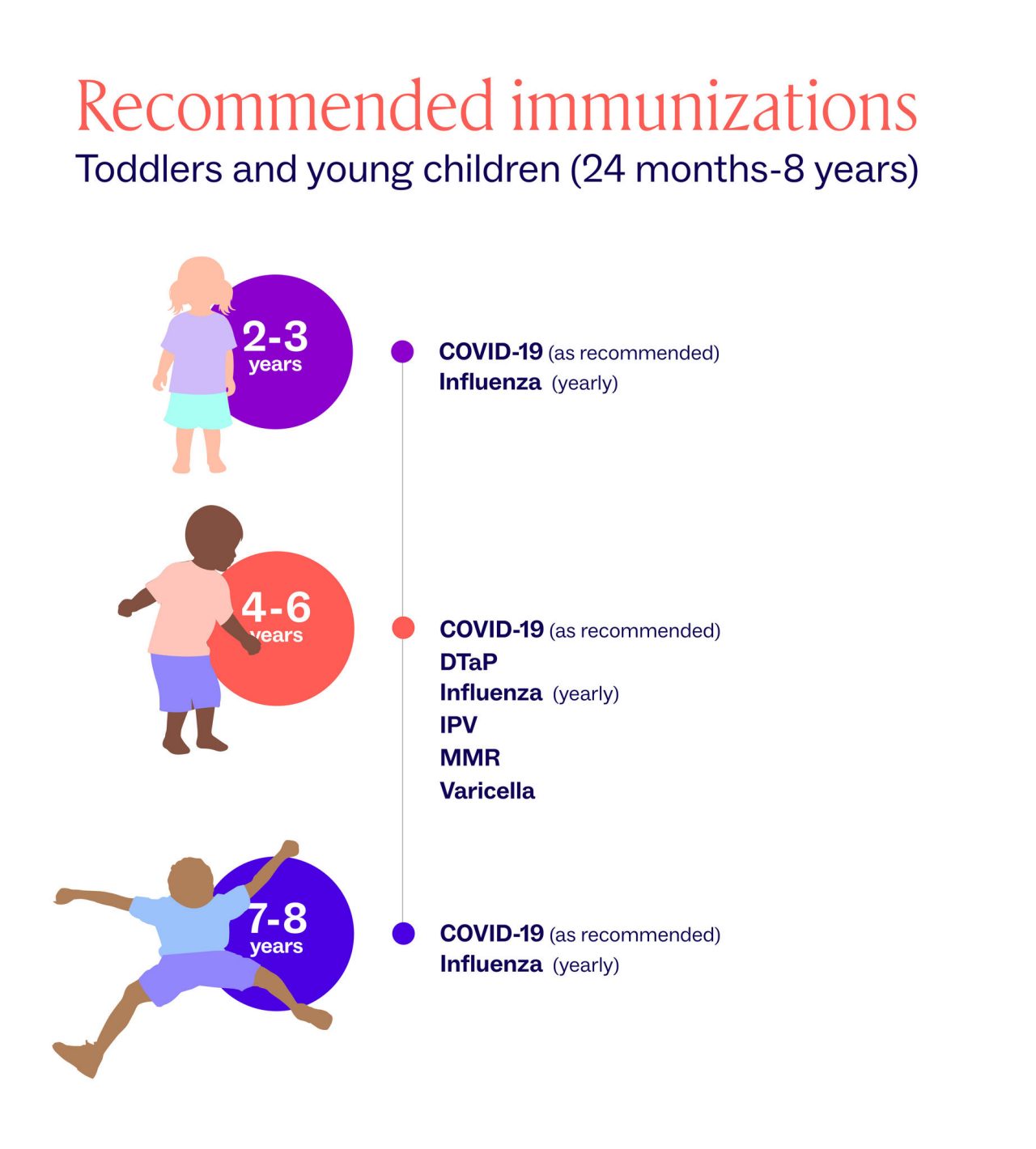
Children ages 4-6 need the following vaccines:
- DTaP (5th dose)
- Polio (4th dose)
- MMR (2nd dose)
- Chickenpox (2nd dose)
Children should also get a flu shot each year. Talk to your child’s doctor about the COVID-19 shot to determine if it’s right for your child.3
What vaccines do adolescents need?
As children get older, their vaccine needs change. The AAP recommends the following schedule for older children and adolescents:3
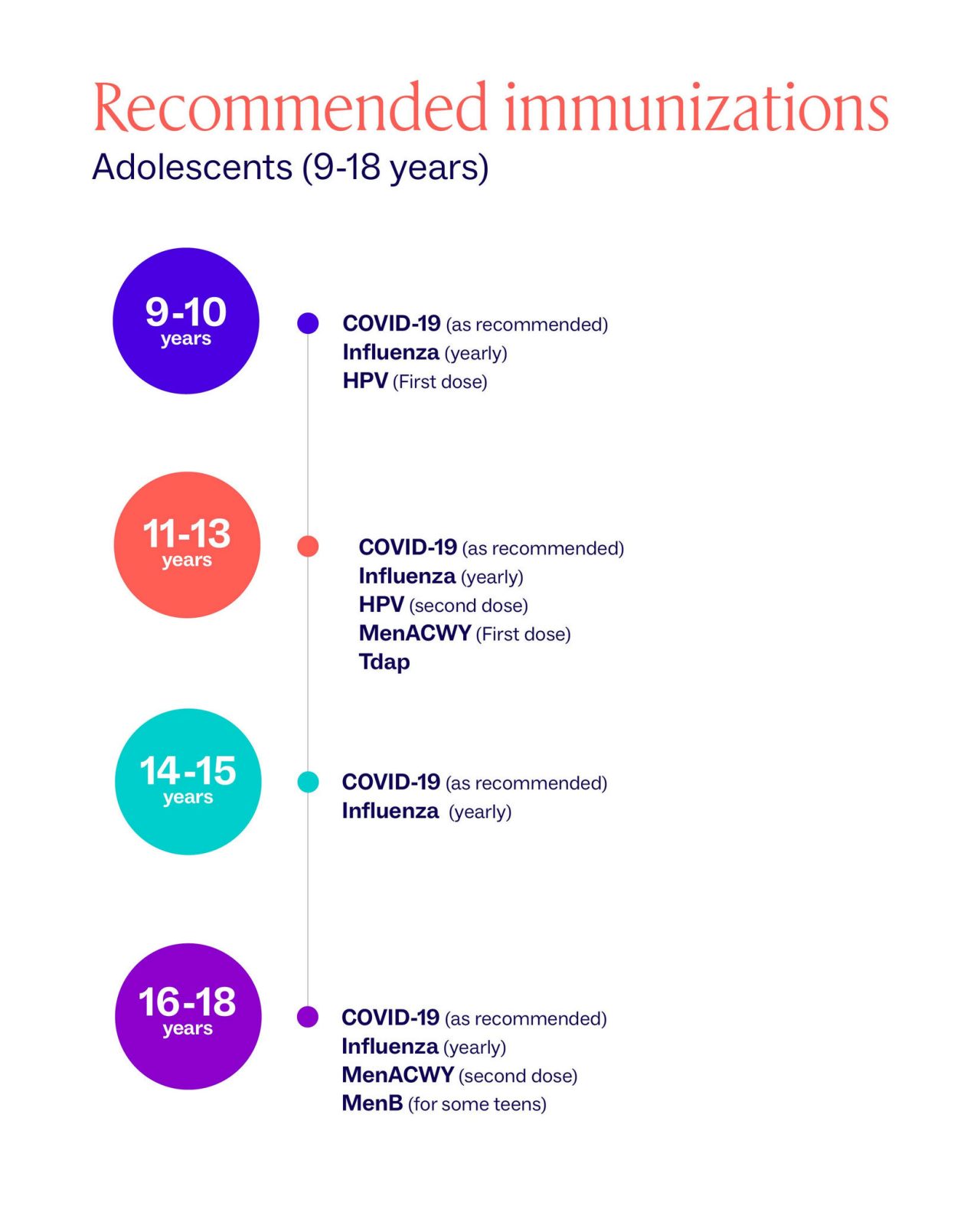
Children ages 9-12 should get the HPV vaccine, which comes in a 2-dose series. They can start at age 9 with the first dose and complete the second before turning 13.
If your child starts the HPV vaccine series after age 15, they will need three doses.
Adolescents should get the meningococcal ACWY vaccine (first dose) and a Tdap booster between the 11th and 13th birthdays.
Teens age 16 need the second dose of the meningococcal ACWY.
You should discuss with your child’s doctor whether the meningococcal B and COVID-19 vaccines are right for them.
Why vaccinating on time is important
Physicians and experts have studied how children’s immune systems develop for decades. Researchers narrowed down the best time for children to get a vaccine based on the age they’re most at risk of developing the disease.2 Sticking to the recommended vaccine schedule can help your children and teens stay ahead of serious disease and illness.
Many professional medical organizations agree that the AAP’s recommended vaccine schedule is best for children’s health.
If your child is not up-to-date with the recommended schedule for any reason, there are options to help you catch up—it’s worth it.
Where you can get children’s and teen’s vaccines
Your child or teen can get their recommended vaccines from their pediatrician or primary care provider’s office as well as local health departments. Some pharmacies also offer vaccines. Contact your insurance provider if you’re not sure where to start—they can help you find in-network coverage.
Set your children up for a healthy life
Routine vaccines and checkups can help keep your kids healthy and prevent future disease. Find a pediatrician or primary care provider to stay up-to-date with your child’s healthcare.
If you’re looking for a new health insurance plan, we can help. Visit SelectHealth.org/Plans to browse our health plans.
Frequently asked questions about childhood vaccines
Yes, vaccines are safe for the vast majority of children. The AAP explains that vaccines must be rigorously tested to be included in their recommended schedule.4 Researchers conduct vaccine trials to make sure they’re safe before they ever reach your children.
In rare cases, vaccine side effects and injuries can happen. They are tracked in the Vaccine Adverse Event Reporting System that medical professionals and the public can use. If you have questions or concerns, have a conversation with your child’s healthcare provider.
No, childhood vaccines do not cause autism. The AAP says researchers have studied vaccines for more than 25 years and have concluded they are not linked to autism.2
This article is intended for informational purposes only and is not legal or medical advice. Links to other sites are provided as a convenience, but Select Health does not endorse the third-party sites, information, or services.
The content included here is for your information and not a substitute for professional medical advice. It should not be used to diagnose or treat a health problem or disease. Please consult your doctor if you have any questions or concerns. Additionally, this information does not guarantee benefits. To review your benefits, please reference your plan materials or call Member Services at 800-538-5038 weekdays, from 7:00 a.m. to 8:00 p.m., and Saturday, from 9:00 a.m. to 2:00 p.m., closed Sunday. TTY users call 711.
Sources
1. Childhood Immunizations, American Academy of Pediatrics
2. All About the AAP Recommended Immunization Schedule, American Academy of Pediatrics, 2026
3. When Should Kids Get the COVID Vaccine?, American Academy of Pediatrics, 2025
4. Vaccine Safety: Examine the Evidence, American Academy of Pediatrics, 2026
Related Articles