
5 questions to ask at your next doctor's visit
For adults ages 65+
Take a moment to think about what’s been on your mind—new symptoms, ongoing concerns, or changes since your last visit.
Tip: Write down your top 1 - 3 concerns and bring them with you, or keep them in your phone so nothing gets forgotten.
Consider bringing someone to your appointment
If you’ve got a few questions to ask, a friend or family member can help take notes.
What do I want to talk about today?
Questions to ask yourself
How is my physical health overall, and are there areas I should work on?
Discuss your strength, balance, mobility, and any pain or fatigue.
How can I lower my risk of falls, at home or when I’m out and about?
Talk about exercise, balance, recent changes in vision, medications you’re taking (some increase your risk of falling), and home safety.
Are my vital signs where they should be for my age?
Ask about things like blood pressure, heart rate, and weight.
Am I taking the best medication for my needs?
Let your doctor know which prescription or over‑the‑counter medicines you take—and if any symptoms or side effects make them hard to take.
How’s my stress, memory, and mood?
You can talk about changes in sleep, focus, or motivation.
Is my bladder healthy?
Tell your doctor how often you use the bathroom, if anything has changed, or if bladder problems are keeping you from activities you enjoy.
During the visit
Ask the doctor
Remember to think about the questions you asked yourself before the visit, including your physical and mental health, ways to prevent falls, and other medical needs.
Based on what I've shared, do you have any concerns?
This helps you understand how your doctor sees your health and ask clarifying questions about their recommendations.
Tip: Listen for whether their priorities match yours, and speak up if something important to you wasn’t mentioned.
What are my options, and what happens if I wait?
Many conditions have more than one path forward. Asking this helps you understand choices, timing, and whether immediate treatment is necessary.
Tip: If decisions feel overwhelming, ask which option best fits your lifestyle or current stage of life.
What should I do next, and when should I check back in?
This turns the visit into a clear plan: what actions to take, what to watch for, and what comes next.
Tip: Before you leave, repeat the plan back in your own words to make sure it’s clear. You can even write it down or ask them to print it out.
After the visit
Ask yourself
Did I feel heard and leave with a plan for my care?
Reflect on how the visit went for you. Feeling understood and having clear next steps are important parts of your care.
Tip: If something still feels unclear, follow up with a quick phone call.
Next steps
Remember to pick up any new medications and add any follow-up appointments to your calendar.
Download our guide
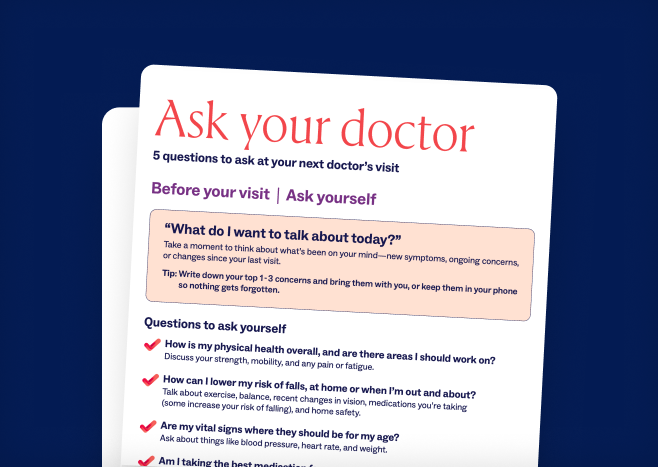
5 questions to ask your doctor
An interactive guide to prepare for your next doctor's visit.
Select Health Medicare
Questions about your plan, benefits, and premium.
855-442-9900 (TTY:711)
Dial option 2 for Pharmacy
April 1 to September 30:
Monday - Friday, 7 a.m. to 8 p.m.
Saturday, 9 a.m. to 2 p.m.
October 1 to March 21:
Monday - Friday, 7 a.m. to 8 p.m.
Saturday - Sunday, 8 a.m. to 8 p.m.
Virtual care services
Scheduled or non-scheduled virtual care appointments.
See virtual care services
Find a doctor
Select or change your primary care provider.
Find a doctor
Care Management
Help managing chronic conditions and accessing resources.
800-442-5305 (TTY: 711)
Monday - Friday, 8 a.m. to 5 p.m.