
Martin didn't always use a wheelchair. But in the autumn months of 2025, his health took a quick turn for the worse and left him partially paralyzed.
In the summer of 2025, he began noticing numbness and weakness in his feet. At the time, he didn’t recognize the symptoms for what they were. After searching online and factoring in his family history, he assumed the neuropathy might be related to prediabetes.
“I just need to work out more,” he remembers thinking.
Only a couple of months later in September, Martin was walking up a hill at the local university when he fell. “All my body weight fell on my right ankle,” he says. “I collapsed on the sidewalk.”
Two strangers who were walking behind him saw the whole thing happen. They rushed to his side and carried him all the way to his car. “They were so kind,” he recalls.
Somehow, Martin managed to drive himself home. Living in a basement apartment at the time, he hobbled downstairs with a fractured ankle.
“I think because of the numbness and the weakness, I didn’t even know it,” he says.
Over the next week, Martin’s condition worsened. He stayed on the couch for several days, knowing something was wrong, but unsure what to do. His girlfriend was helping as best as she could, but Martin eventually fell off the couch. “I was spouting nonsense,” Martin explains. That’s when his girlfriend made the call that likely saved his life.
“She was like, ‘Hey, I’m calling 911. This isn’t going on anymore.’ Which I’m very, very grateful she did, because I maybe wouldn’t be alive if she hadn’t,” he recalls.
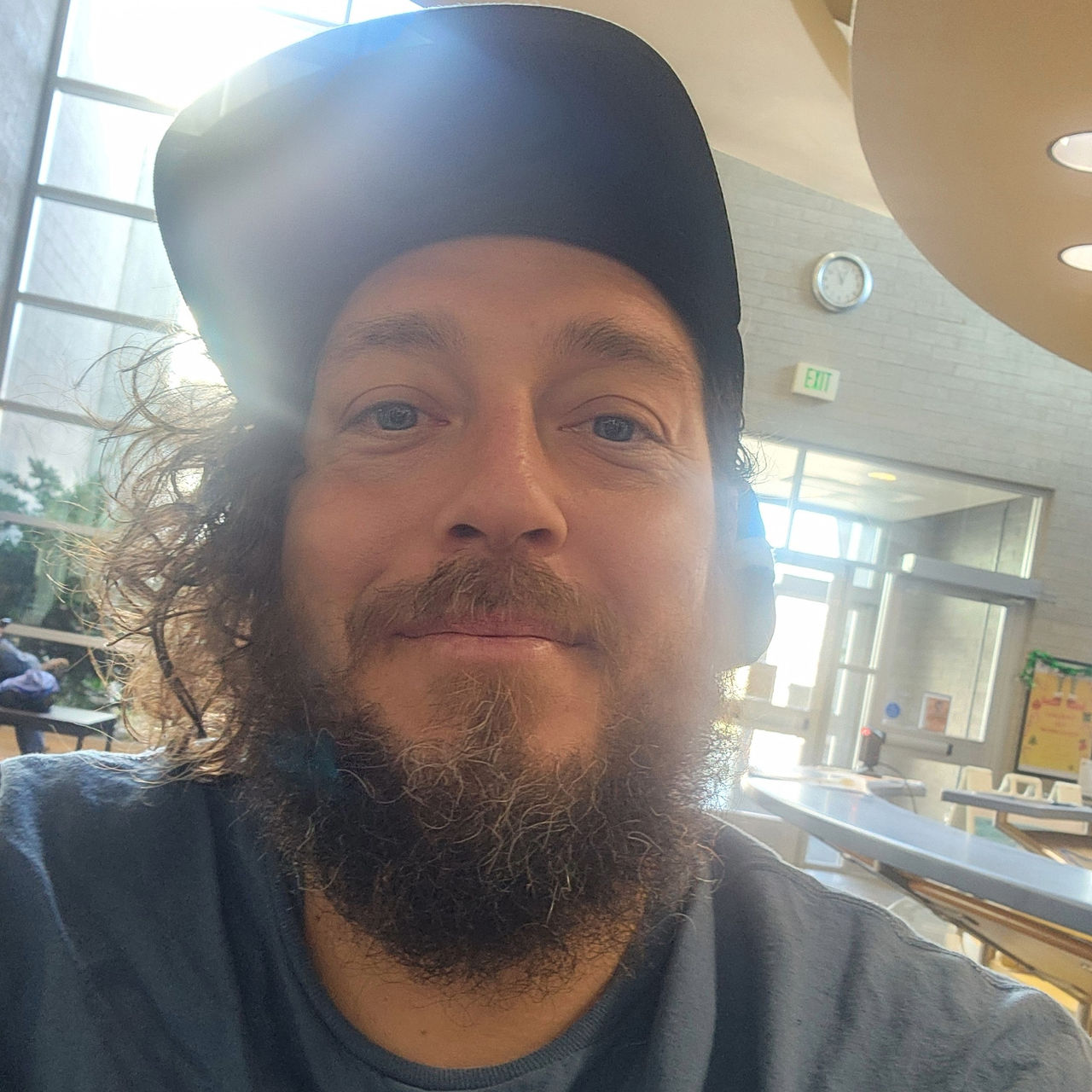
Spending months in the hospital
When he arrived at the hospital, doctors learned he had broken two bones in one leg. He developed five blood clots in his leg and at least seven in his lungs. And he couldn’t remember much of the day EMS brought him to the hospital or the two weeks following.
“I remember they were asking me questions daily and I just, I couldn't remember. It was weird,” he recalls.
Many tests later, they identified the root problem. Doctors say he had a severe vitamin B12 deficiency that led to a condition called subacute combined degeneration (SACD), resulting in a spinal cord injury. It was also the cause of his memory and neurological issues.
“Thankfully, I got an incomplete spinal cord injury compared to complete paralysis,” he explains.
If he had had a complete spinal cord injury, he would likely have never been able to walk again. But his doctors identified the problem in time and started treatments to begin the healing process.
It took weeks for the B12 shots to build up his ability to move again. He explains that he couldn’t move his feet or legs, and his hands were numb nearly the entire time he was in the hospital.
None of it was caused by the surgery to fix his leg—it was from the B12 deficiency. “I couldn’t open sauce packets, jars, Ziploc bags—anything with my hands,” Martin recalls.
With time, medication, and lots of physical and occupational therapy, Martin built up enough strength to finish recovering at home.
Recovering at home with support
Martin left the hospital to recover at his dad’s house, since he’s still using a wheelchair and his own basement apartment wasn’t easily accessible. Even though his father’s home was more wheelchair-friendly, it's an older home with narrower doorways which don’t work well with standard wheelchairs.
He met with a local company to get a personalized wheelchair fitted and ordered. Everything from the width of the chair to the size of the footplates was customized to his needs.* He also got to pick the color. “I chose cosmic purple, which I was very excited about,” he says.
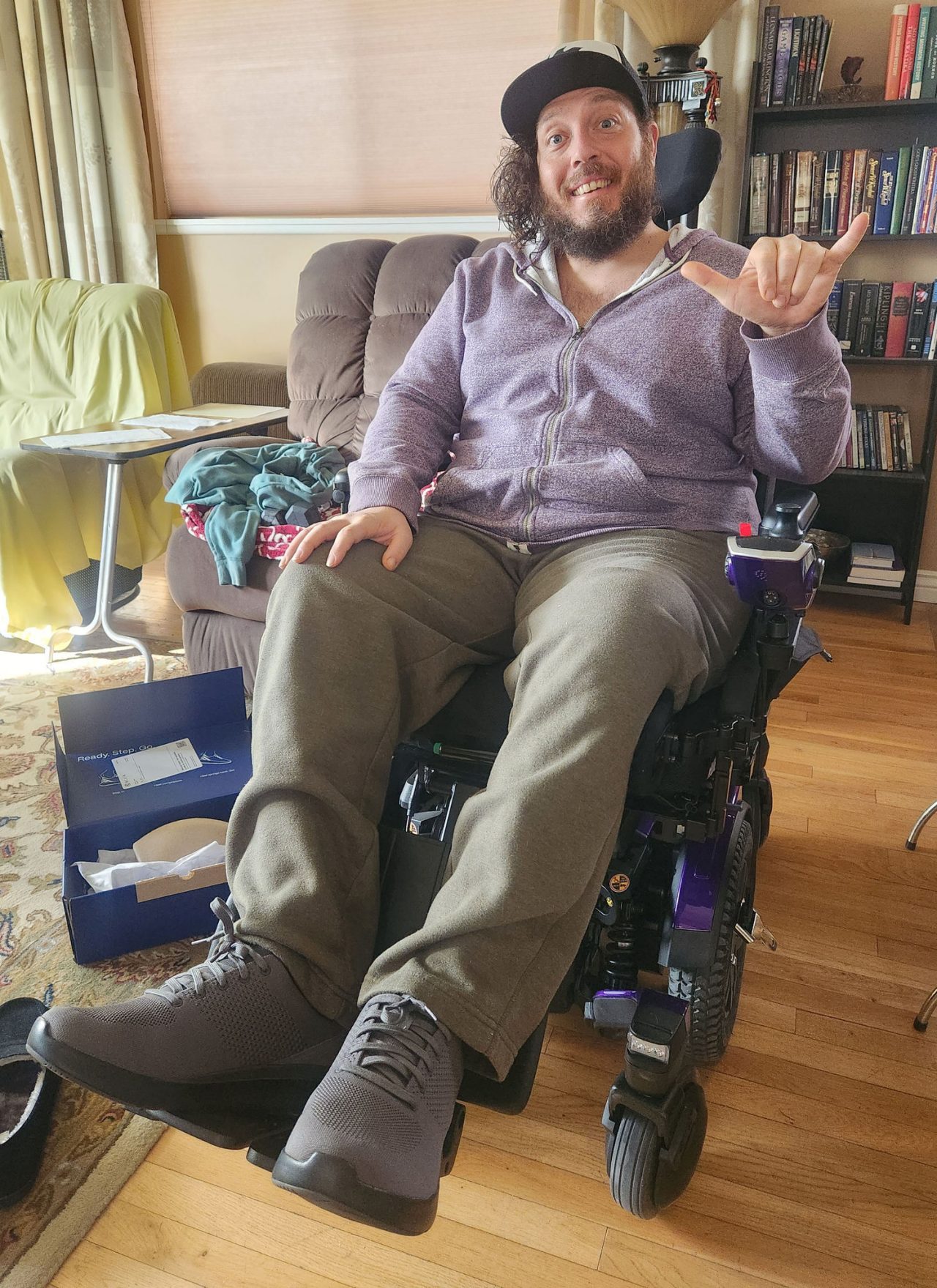
Martin was told the wait for his chair would probably take 2-3 months minimum, since health insurance approvals and ordering can take time. Surprising everyone, they were able to secure it for him in less than two months—even around the holidays.
“I was just elated,” Martin recalls.
Slow but steady progress
Slowly, with treatment, physical therapy, and time, Martin is making encouraging progress. With continuous B12 treatments and hard work, he can start to feel sensation again in his feet and legs.
“I'm getting stronger every week. I'm getting more flexible every time my therapists test me. I’m just excited,” he says.
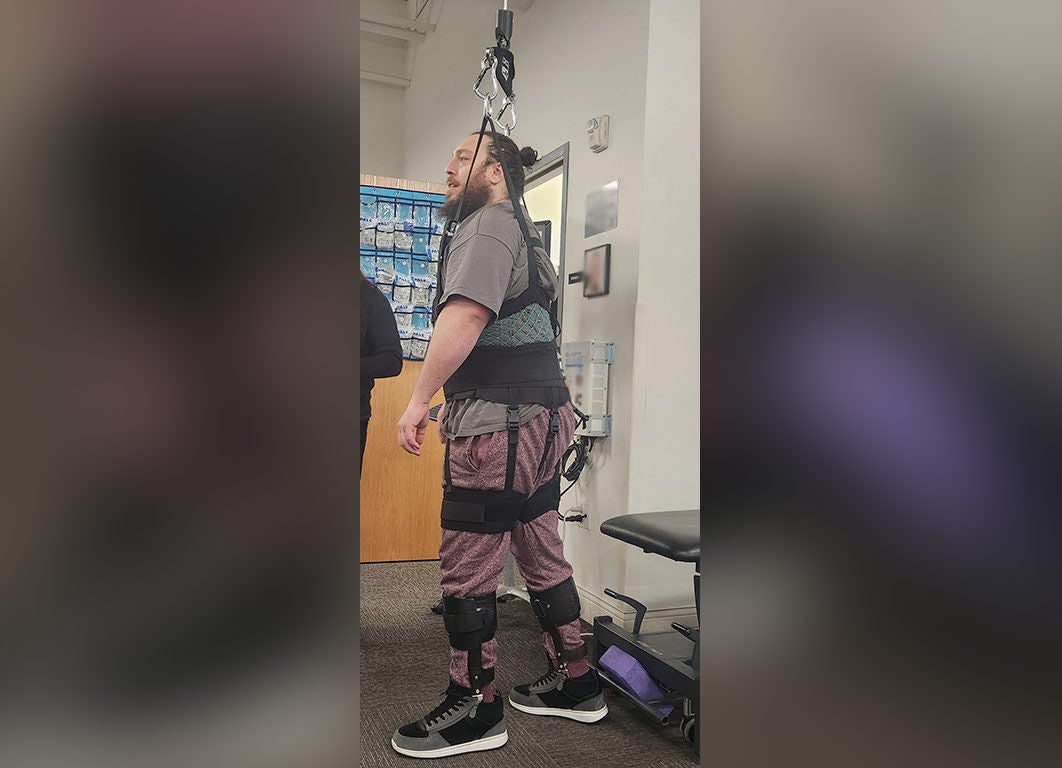
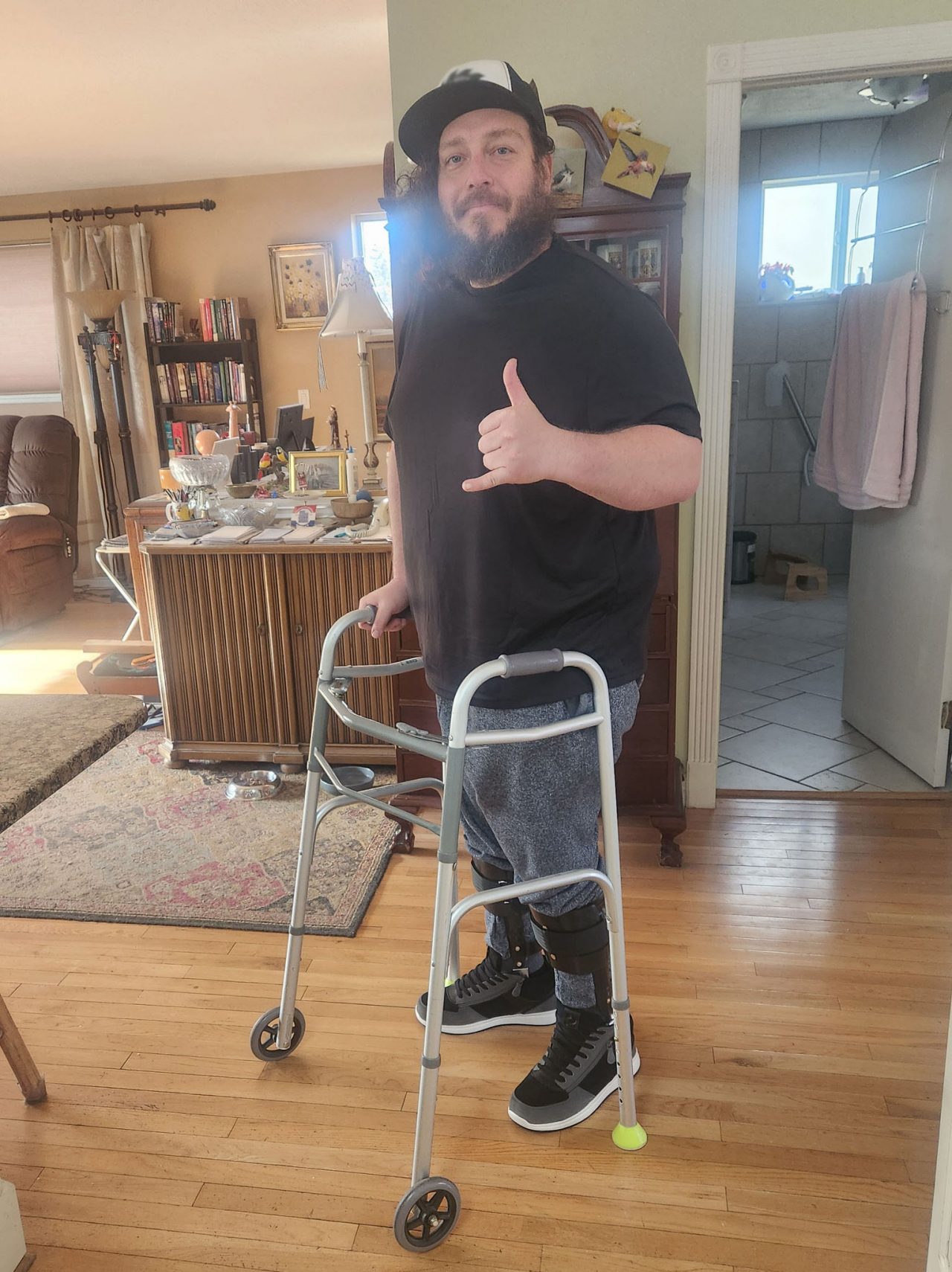
In fact, he recently started walking with the help of a walker and braces. He’s even behind the wheel and able to drive again.
Though it will take longer to be able to walk without any equipment, Martin can now use his hands to do normal tasks, like writing and even drawing. “Now I have pretty much 97 to 98% control over my hands,” he says. “Sometimes I still have a slight tingly feeling, but my hands feel so much better.”
Though it’s been an intense and frustrating few months, Martin is just happy to be making progress and healing.
“I'm really grateful that I have a chance to just walk again,” he says. “And I don't need to run marathons, but if I can take my dog to the park, if I can go play disc golf, I'll probably cry or scream. One of the two.”
Grateful for health insurance and quality care
After staying in the hospital for months, getting the medical equipment he needed, and continuing to meet with physical therapists and trainers, the bills started piling up—quickly. He jokes that it felt like a second full-time job navigating bills and paperwork. But having health insurance was a huge relief.
“When I got the explanation of benefits, I saw that Select Health paid over $600,000 for me,” he recalls. “I was very grateful I had health insurance.”
Ultimately, Martin recognizes everyone who helped him recover and get his life back on track. “I’m so grateful for the hospital staff, medical professionals, my girlfriend, family, and friends. I wouldn’t be where I am now without them.”
Do you need a new health insurance plan? We’ve can help. Find the plan that works best for you and your family on the Select Health website.
*Coverage varies based on plan type and individual medical needs.
This article is intended for informational purposes only and is not legal or medical advice. Links to other sites are provided as a convenience, but Select Health does not endorse the third-party sites, information, or services.
The content included here is for your information and not a substitute for professional medical advice. It should not be used to diagnose or treat a health problem or disease. Please consult your doctor if you have any questions or concerns. Additionally, this information does not guarantee benefits. To review your benefits, please reference your plan materials or call Member Services at 800-538-5038 weekdays, from 7:00 a.m. to 8:00 p.m., and Saturday, from 9:00 a.m. to 2:00 p.m., closed Sunday. TTY users call 711.
Related Articles